November 2024: Testosterone Testing Name Changes

Clinical Updates

Testosterone Testing Name Changes

Beginning November 19, 2024, test names for current testosterone test options will be updated to better convey the testing method and recommended patient population.

Refer to the table below for more information.

Questions? Please contact Client Services.

Test Overview

Test Name

Testosterone, Total by Immunoassay [adult males, or individuals on testosterone therapy]

Testosterone, Bioavailable & Total by Immunoassay [adult males, or individuals on testosterone therapy]

Testosterone, Bioavailable & Total by MS [adult females, children, or individuals on testosterone-suppressing therapy]

Testosterone, Free and Total, by Equilibrium Dialysis/Ultrafiltration Mass Spectrometry

Formerly: Testosterone

Formerly: Bioavailable Testosterone, Adult Male

Formerly: Bioavailable Testosterone/SHBG, Female & Child

Formerly: Testosterone, Total and Free, Serum

Included Analytes

  • Testosterone
  • Testosterone
  • Albumin
  • SHBG
  • Bioavailable testosterone
  • Free testosterone
  • Testosterone
  • SHBG
  • Bioavailable testosterone
  • Free testosterone
  • Testosterone
  • Free testosterone

Performing Laboratory

Cleveland Clinic Laboratories, Auto. Chemistry

Cleveland Clinic Laboratories, Auto. Chemistry

ARUP

LabCorp

Turnaround Time

8 hours

8 hours

2-6 days

5-7 days

Methodology

Immunoassay

Immunoassay; Calculation

LC-MS/MS; Immunoassay; Calculation

Equil. ultrafiltration mass spec.

July 2024: Blood Culture Bottle Shortage

Clinical Update

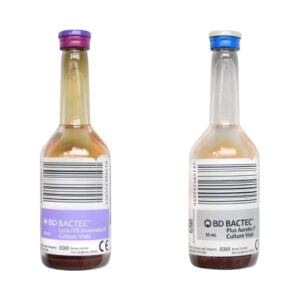
Blood Culture Bottle Shortage: Make the most of every bottle

A global shortage of blood culture bottles is expected to last for months, so we need caregivers’ help to make the most of every bottle.

Blood cultures are commonly used in patients with symptoms of an infection. It is always important to culture with purpose, but even more so when supplies are constrained.

When placing blood culture orders, consider this high-level overview of some blood culture best practices: 

Do’s

Blood cultures are recommended as part of the initial evaluation for:

  • Severe sepsis or septic shock

  • Neutropenia with fever and febrile illnesses in immunocompromised patients

  • High-acuity illnesses like meningitis, endocarditis, and vascular graft infections

  • Fever in a patient with central venous catheter

  • Fever in an infant

Don’ts

Blood cultures are not routinely helpful for general medical and surgical patients with these common conditions:

  • Isolated fever without shaking chills

  • Isolated leukocytosis

  • Uncomplicated cystitis and prostatitis, non-severe community-acquired pneumonia, and non-severe cellulitis

  • Asymptomatic patients with a central line

  • Post-operative fever within 48 hours of surgery

For follow-up testing:

Do’s

Blood cultures are needed:

  • To confirm clearance of Staphylococcus bacteremia and candidemia

  • To confirm bloodstream clearance when treating a catheter-related bloodstream infection when the catheter has been maintained

Don’ts

Blood cultures are not needed to confirm bloodstream clearance in these situations:

  • Bacteremia due to urinary tract infection

  • Most routine gram-negative bacteremias

  • Bacteremia due to pneumonia or soft tissue infection

When drawing blood for blood cultures, remember these best practices:

Once the decision is made to culture, draw two sets – a single set is not optimal.

Avoid false-positive results due to skin contamination by strictly adhering to antisepsis protocols before venipuncture.

Collect the recommended volume of blood to maximize test sensitivity (weight-based blood volume for children; 8-10 mL per bottle for adults).

No order = no draw. Do not draw blood cultures before an order is placed, which can result in discarded bottles.

Test Discontinuation: Creatine Kinase-Myocardial Band

Clinical Updates

Test Discontinuation – Creatine Kinase-Myocardial Band (CKMB)

Beginning June 11, 2024, Creatine Kinase-Myocardial Band (CKMB) testing (CKCKMB, MBE) will no longer be orderable at Cleveland Clinic.

Recommended Alternative Test: High-Sensitivity Troponin T (HSTNT)

Background

CKMB is an antiquated cardiac marker due to its limited clinical utility. Current guidelines recommend cardiac troponin testing as the biomarker of choice for myocardial injury due to its superior specificity and sensitivity. Additionally, co-testing with CKMB and troponin adds no incremental value.  

This is supported by the American College of Cardiology (ACC), European Society of Cardiology (ESC), Association for Diagnostics & Laboratory Medicine (formerly AACC), American Society for Clinical Pathology (ASCP), Cleveland Clinic’s Cardiovascular Medicine Division, Clinical Biochemistry Section, and Laboratory Stewardship Committee. 

References

  • Fourth Universal Definition of Myocardial Infarction (PMID: 30571511) 
  • Eliminating CKMB Testing in Suspected ACS: A Value-Based Quality Improvement (PMID: 28806444) 
  • ESC Study Group on Cardiac Biomarkers of the Association for Acute CardioVascular Care: A Fond Farewell at the Retirement of CKMB (PMID: 33486520)

New Test: Alzheimer’s Disease Biomarker Panel, Cerebrospinal Fluid

Clinical Updates

New Test – Alzheimer’s Disease Biomarker Panel, Cerebrospinal Fluid

Alzheimer’s Disease Biomarker Panel, Cerebrospinal Fluid (ALZCSF) measures p-Tau181, Total-Tau, and β-Amyloid (1-42) (Abeta42).

Testing is performed on cerebrospinal fluid (CSF) from adult patients 55 years of age and older undergoing evaluation for Alzheimer’s disease and other causes of cognitive impairment to generate pTau181/Abeta42 and Total-Tau/Abeta42 ratios.

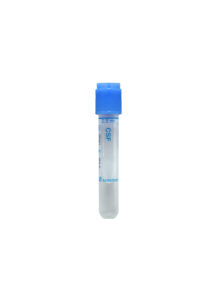
The new test requires a CSF Specimen Transport Tube and other modifications to the reporting format, which are detailed below.

Note: ADmark Phospho-Tau CSF (PHOTAU) testing, sent out to Athena, will be discontinued.

Test Overview

Test Name

Alzheimer’s Disease Biomarker Panel, Cerebrospinal Fluid

Test Code

CPT Codes

83520 – QTY (3)

Methodology

Electro Chemiluminescence Immunoassay (ECLIA)

Specimen Requirements

Type:
Cerebrospinal fluid (CSF)

Volume:
2.5 mL

Collection Instructions

  1. Confirm that the tube type is correct – only a specimen collected in the Sarstedt CSF Transport Tube [ref. 63614.625] is acceptable.
  2. Perform a lumbar puncture using the gravity drip collection method (preferred). Do not use the first 2 mL of CSF.
  3. Collect CSF directly into the tube up to the fill line.
  4. Inspect the sample for the presence of blood. Do not use CSF samples that appear reddish. Instead, collect additional clear (non-hemolytic) CSF in a new CSF tube.
  5. Do not process the sample before sending it to the laboratory (i.e., do not invert, transfer, or aliquot).

Rejection Criteria

CSF collected in polystyrene or glass tubes

Bloody or hemolyzed specimens.

Unfilled tubes.

Stability

Ambient:
5 days

Refrigerated (preferred):
14 days

Frozen:
8 weeks (-20⁰C)

Days Performed

Days Performed
Once a week

Reported
1-8 days

Reporting

Component

p-Tau181/Abeta42

Total-Tau/Abeta42

p-Tau181

Total-Tau

Abeta42

Reference Interval

≤0.0230

≤0.280

≤31.3 pg/mL

≤375.4 pg/mL

≥564.2 pg/mL

Clinical Information

A negative p-Tau181/Abeta42 ratio and/or Total-Tau/Abeta42 ratio is consistent with a negative amyloid positron emission tomography (PET) scan and reduces the likelihood that a patient’s cognitive impairment is due to Alzheimer’s disease.

A p-Tau181/Abeta42 ratio and/or Total-Tau/Abeta42 ratio elevated above the cut-off is consistent with biological changes associated with Alzheimer’s disease (AD) and a positive amyloid positron emission tomography (PET) scan. A positive result does not establish a diagnosis of AD or other cognitive disorders and should be interpreted as an adjunct to other clinical diagnostic information.

The ratios will not be calculated in samples with an Abeta42 concentration >2,500 pg/mL. This result is consistent with a negative amyloid positron emission tomography (PET) scan and reduces the likelihood that a patient’s cognitive impairment is due to Alzheimer’s disease.

The p-Tau181, Total-Tau, and Abeta42 tests are not intended to be used as a stand-alone test in spinal fluid. For interpretation of results, refer to the p-Tau181/Abeta42 and Total-Tau/Abeta42 ratios.

The test method is the Elecsys electrochemiluminescence immunoassay manufactured by Roche Diagnostics. Values determined by different assay methods cannot be used interchangeably.

The validity of this test interpretation requires strict adherence to the specimen collection and preparation instructions detailed in the Cleveland Clinic’s Test Directory.

January 2024: Send-Out Test Delays Caused by Weather

Immediate Test Notification

January 2024: Send-Out Test Delays Caused by Weather

Due to the recent winter weather, there are ongoing delays in the shipment of specimens from Cleveland Clinic Laboratories to reference laboratories, including ARUP, Mayo, LabCorp, Quest, National Jewish, Eurofins Viracor, and others.

Transportation vendors are working through operational backlogs, and we are communicating with vendors to ensure sample stability and perform testing as quickly as possible.

Please get in touch with your CCL Sales Manager or Client Services with any questions.

July 2023: Updates to Genital & Sexual Health Specimen Collection

Clinical Updates

Updates to Genital & Sexual Health Specimen Collection

Follow these guidelines for specimen submission in accordance with changes outlined in the May 2023 Technical Update.

Effective July 17, 2023, the laboratory will reject incorrectly submitted specimens.

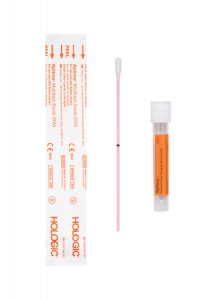
Aptima® Multitest Swab Collection Kit

This kit is used for the following tests:

  • Gonorrhea & Chlamydia (GCCT)
  • Mycoplasma genitalium (MYGAMP)
  • Trichomonas vaginalis (TRVAMP)
  • Candida & Trichomonas (CVTV)
  • Bacterial Vaginosis (BVAMP)

Sample Type

Gonorrhea & Chlamydia (GCCT)

Mycoplasma genitalium (MYGAMP)

Trichomonas vaginalis (TRVAMP)

Candida & Trichomonas (CVTV)

Bacterial Vaginosis (BVAMP)

Clinician-Collected Vaginal Swab

Patient-Collected Vaginal Swab

Patient-Collected Penile Meatal Swab

✓ 

Clinician-Collected Throat Swab

Clinician-Collected Rectal Swab

FDA-approved and preferred

✓ 

FDA-approved and acceptable

FDA-approved but not recommended due to inferior
performance

*

Lab-Developed Test (not FDA-approved)

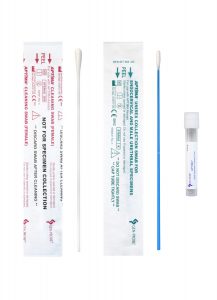
Aptima® Unisex Swab Collection Kit

This kit is used for the following tests:

  • Gonorrhea & Chlamydia (GCCT)
  • Mycoplasma genitalium (MYGAMP)
  • Trichomonas vaginalis (TRVAMP)

Sample Type

Gonorrhea & Chlamydia (GCCT)

Mycoplasma genitalium (MYGAMP)

Trichomonas vaginalis (TRVAMP)

Candida & Trichomonas (CVTV)

Bacterial Vaginosis (BVAMP)

Clinician-Collected Endocervical Swab

✓ 

✓ 

✓ 

Clinician-Collected Male Urethral Swab

✓ 

*

FDA-approved and preferred

✓ 

FDA-approved and acceptable

FDA-approved but not recommended due to inferior
performance

*

Lab-Developed Test (not FDA-approved)

Aptima® Urine Specimen Collection Kit

This kit is used for the following tests:

  • Gonorrhea & Chlamydia (GCCT)
  • Mycoplasma genitalium (MYGAMP)
  • Trichomonas vaginalis (TRVAMP)

Sample Type

Gonorrhea & Chlamydia (GCCT)

Mycoplasma genitalium (MYGAMP)

Trichomonas vaginalis (TRVAMP)

Candida & Trichomonas (CVTV)

Bacterial Vaginosis (BVAMP)

Female Urine

✓ 

*

Male Urine

✓ ✓

✓ ✓

*

FDA-approved and preferred

✓ 

FDA-approved and acceptable

FDA-approved but not recommended due to inferior
performance

*

Lab-Developed Test (not FDA-approved)

Aptima® Specimen Transfer Kit

Note: This can only be ordered as an add-on test by contacting Client Services.

This kit is used for the following tests:

  • Gonorrhea & Chlamydia (GCCT)
  • Trichomonas vaginalis (TRVAMP)

Sample Type

Gonorrhea & Chlamydia (GCCT)

Mycoplasma genitalium (MYGAMP)

Trichomonas vaginalis (TRVAMP)

Candida & Trichomonas (CVTV)

Bacterial Vaginosis (BVAMP)

ThinPrep® PreservCyt®

✓ 

FDA-approved and preferred

✓ 

FDA-approved and acceptable

FDA-approved but not recommended due to inferior
performance

*

Lab-Developed Test (not FDA-approved)

July 2023: Updates to Recommended Myelodysplastic Syndrome Testing

Clinical Updates

Updates to Recommended Myelodysplastic Syndrome (MDS) Testing

Effective August 17, 2023.

Cleveland Clinic Laboratories’ Molecular Pathology & Cytogenomics section offers several testing options for individuals suspected to have Myelodysplastic Syndrome (MDS):

  • Chromosome Analysis Only  CHRBMH
  • Chromosome Analysis with reflex to FISH with MDS Panel* (if there are no chromosome results or the chromosome analysis was sub-optimalCHRMDS
  • Chromosome Analysis with reflex to Microarray (CMA)  BMCHF
  • FISH Only with MDS Panel*, blood  FSHMDS 
  • FISH Only with MDS Panel*, bone marrow  FSMDSM 

*MDS Panel contains FISH probes specific to chromosomes 5, 7, 8, and 20.

Testing Guidelines 

Per the National Comprehensive Cancer Network (NCCN) Myelodysplastic Syndromes Guidelines [version 1.2023 (09/12/22)] 

If standard cytogenetics (with ≥20 metaphases) cannot be obtained, a chromosome microarray [(CMA), also known as chromosome genomic array testing (CGAT)] or MDS-related fluorescence in situ hybridization (FISH) panel should be performed. If karyotype is normal, consider CMA. Note that CMA will detect not only somatic but constitutional (germline) changes. 

Recommended Testing

In keeping with the NCCN guidelines, Chromosome Analysis with Reflex to FISH (CHRMDS) is Cleveland Clinic Laboratories’ recommended test for individuals suspected to have MDS.

Discontinued Testing

Beginning August 17, 2023, the FISH Only with MDS Panel (FSHMDS & FSMDSM) for blood and bone marrow will be discontinued.
Note: Chromosome Analysis Only (CHRBMH) and Chromosome Analysis with reflex to Microarray (BMCHF) may still be ordered.

Questions?

Please contact your CCL Sales Manager or Client Services at 800.628.6816.

Cleveland Clinic and LabConnect Announce Strategic Alliance

Clinical Update

Cleveland Clinic and LabConnect Announce Strategic Alliance

Collaboration on lab services will accelerate clinical trials to better impact patient care.

Cleveland Clinic Laboratories and LabConnect have announced a strategic alliance to accelerate clinical trials and connect patients to new medicines for improved patient care.

Through this alliance, LabConnect will utilize Cleveland Clinic Laboratories, the reference laboratory within Cleveland Clinic. LabConnect will leverage the health system’s extensive array of testing and assay validation services to support laboratory testing for an increasing number of clinical trials.

CC-SIGN® Targeted Oncology Panel (TOP) by Next-Generation Sequencing

Clinical Updates

New Test: CC-SIGN® Targeted Oncology Panel (TOP) by Next-Generation Sequencing

Available to order starting on June 20, 2023.

A new, enhanced 59-gene hotspot Next-Generation Sequencing (NGS) panel is available for tumor DNA and RNA evaluation.

The Targeted Oncology Panel (TOP) is a custom 59-gene Next-Generation Sequencing (NGS) panel developed for the identification of single nucleotide variants (SNVs), small insertions and deletions (indels), and copy number gains (CNVs) from DNA specimens, and fusion transcripts and aberrant transcripts from RNA specimens.

The workflow allows for the concurrent testing of DNA and RNA to analyze over 1,000 biomarkers.

Targeted Oncology Panel by NGS

Order Codes
TOPTO (FFPE Tissue)
TOPCY (Cytology Alcohol or Formalin fixed cell block)
TOPBM (Bone Marrow Aspirate)
TOPPB (Peripheral Blood)

This test requires 5-10% tumor purity and does not evaluate circulating tumor DNA.

CPT Code
81445

Methodology
Next-Generation Sequencing

Specimen Type
FFPE Tissue
15 charged, unbaked, and unstained slides sectioned at 7 μm.
One pre and one post H&E slide with tumor area circled, and percent rumor indicated.

Cytology
15 charged, unbaked and unstained slides sectioned at 7 μm.
One H&E slide with tumor percent indicated.

Bone Marrow Aspirate
2 mL, Lavender K2EDTA Tube

Peripheral Blood
4 mL, Lavender K2EDTA Tube

Days Performed
2–3 times per week

Turnaround Time
8 days

Overview

Single nucleotide variants (SNVs), small insertions and deletions (indels), copy number gains, select fusions, and aberrant transcripts evaluated by this assay can aid in the diagnostic and therapeutic assessment of a variety of tumor types, including non-small cell lung cancer, melanoma, colorectal cancer, prostate cancer, breast cancer, glioblastoma, thyroid cancer, and others.

This panel can also provide focused tumor profiling for patients with locally advanced/metastatic disease, who are candidates for anti-cancer therapy, to identify uncommon but targetable alterations. In particular, this panel can be utilized for small biopsies and cytology specimens that may not be amenable to more comprehensive genomic sequencing.

Targeted Genes & RNA Fusions

For a full list of targeted genes & RNA fusions, please refer to the Targeted Oncology Panel by Next-Generation Sequencing Technical Brief.

How to Order

Place an order through an electronic interface or complete a Molecular Oncology & Associated Biomarkers Requisition and submit it with the specimen(s).

Hot Spot Panel Discontinuation

The TOP NGS panel will replace solid tumor hotspot mini-panels (Lung, Colorectal, Melanoma, GIST, etc.), as all previously detected biomarkers are included in the new testing.

In situations where the mini-panels were previously used as part of an upfront diagnostic workup, pathologist diagnostic and reflex ordering will utilize TOP testing.

May 2023: New Test – Clozapine (CLOZA)

Clinical Updates

New Test: Clozapine (CLOZA)

Effective May 23, 2023.

Therapeutic drug monitoring for clozapine will be offered as an in-house test starting Tuesday, May 23, 2023.

The current send-out test, Clozapine and Metabolites, Serum or Plasma, Quantitative (CLOZSP), currently sent out to ARUP Laboratories, will be discontinued on June 20, 2023.

Clozapine (CLOZA)

New Test – CLOZA

Specimen Type
Red Serum Tube (No Additive)

Methodology
Turbidimetric immunoassay

Result Components
Clozapine

Days Performed
Monday – Saturday

Turnaround Time
1-4 days

Clozapine results greater than 1000 ng/mL have been designated as urgent.

Sendout Test – CLOZSP

Specimen Type
Red Serum Tube (No Additive) or Lavender K2EDTA Tube

Methodology
Liquid chromatography-tandem mass spectrometry

Result Components
Clozapine
Norclozapine
Clozapine-N-Oxide

Days Performed
Sunday – Saturday

Turnaround Time
2-4 days