November 2023: Product Discontinuation – BD CultureSwab™

Immediate Test Change

Product Discontinuation: BD CultureSwab™ Liquid Amies Double Swab

Effective November 14, 2023.

Replacements: eSwab™ or Cepheid Collection Device

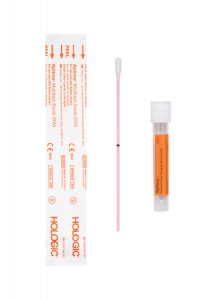
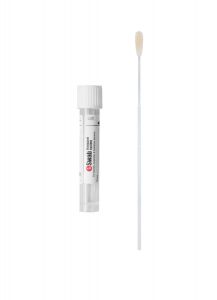
The eSwab™ (Copan Diagnostics) collection device—utilized by Cleveland Clinic for 8+ years—will now be the primary swab for bacteriology.

No change to the swabbing collection process is needed when using an eSwab™.

Although typically tissue or fluid is a superior quality sample for bacteriology, collecting a swab is often more feasible. The eSwab™ uses a patented flocked swab, which enables the elution of the primary sample into 1 mL of liquid contained within the collection tube. The bacteriology laboratory then uses this liquid for testing.
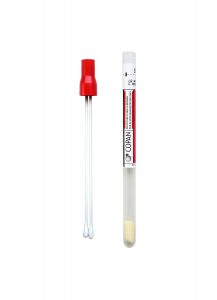
Swab discontinued by the manufacturer.

Choose the appropriate collection device: 

eSwab™

Use for:
Group A Strep PCR GASPCR

Fungal Screen for Candida FUNGSC

Bacteriology cultures:
• Abscess & Wound Culture WCUL
• Anaerobe Culture ANACUL
• Cystic Fibrosis Respiratory Culture CFRCUL
• Ear Culture & Stain EARCSM
• Eye Culture & Stain EYECSM
• MRSA culture screen MRSASC
• MRSA/S. aureus culture screen SANSAL
• Throat Culture THRCUL
• VRE Culture VRESC
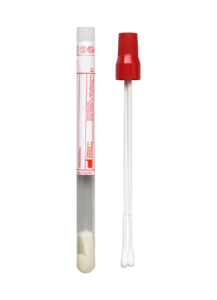
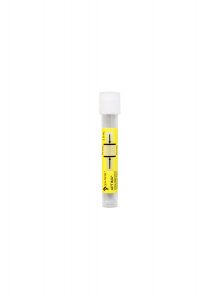
Cepheid Collection Device

Use for:
Routine Prenatal Group B PCR GBPCR

S. aureus PCR SAPCR

November 2023: Test Update – Chromogranin A, New Assay

Immediate Test Change

Test Update – Chromogranin A (CHROMA), New Assay

Effective November 9, 2023.

Chromogranin A (CHROMAwill be updated to a new assay effective November 9, 2023.

The results of the current and new tests are not interchangeable. Due to a reagent shortage, the laboratory will not be able to undergo a rebaseline/parallel testing process.

Please contact Client Services for laboratory assistance with interpreting results in patients undergoing serial monitoring.

Test Change Overview

Chromogranin A (CHROMA)

Update?

Details

Methodology

Yes

New Assay:
Immunoassay, BRAHMS CGA II Kryptor Kit

Discontinued:
Cisbio CGA II, ELISA

The results in the new assay are, on average, 20% lower than the previous assay. The bias is more pronounced at concentrations below 200 ng/mL, where the observed bias is 30%.

Test Code

No

Specimen

No

Type
Serum

Container
Gold Serum Separator Tube, or
Red Plain (No Additive) Tube

Stability

Yes

Ambient:
48 hours

Refrigerated:
48 hours

Frozen:
3 months

Transport samples frozen.

Days Performed

Yes

Days Performed
Tuesday, Friday

Reported
1-4 days

Reporting

Yes

Reference Interval
<187 ng/mL

The results of the new and old assays will not trend together in the laboratory information system (e.g., Beaker/EPIC).

November 2023: Test Delay – Oxalate, Plasma and Oxalate, 24-hour Urine

Immediate Test Change

Test Delay – Oxalate, Plasma (OXLATE) and Oxalate, 24-hour Urine (UOXALD)

Effective November 6, 2023.

Oxalate, Plasma (OXLATE) and Oxalate, 24-hour Urine (UOXALD) will be delayed effective November 6, 2023, due to a global reagent shortage.

Currently, there are no alternative testing options available.

The vendor expects the reagent to be available in late November/December 2023.

For Existing Orders/Specimens
Specimens will be stored frozen, pending the arrival of the reagent. However, if specimens exceed validated stability (4 weeks for plasma specimens, 7 days for urine specimens), testing will be canceled.

Questions?
Please contact Client Services for assistance.

September 2023: Changes to Reference Ranges – Catecholamines, Fractionated, Plasma (PLCAT)

Special Communication

Changes to Reference Ranges – Catecholamines, Fractionated, Plasma (PLCAT)

Effective October 2, 2023.

Catecholamines, Fractionated, Plasma (PLCAT)

Epinephrine (18 years and older)
Seated (15 min): Less than or equal to 330 pmol/L
Supine (30 min): Less than or equal to 265 pmol/L

Norepinephrine (18 years and older)
Seated (15 min): 1050-4800 pmol/L
Supine (30 min): 680-3100 pmol/L

Dopamine (18 years and older)
Seated (15 min): Less than or equal to 240 pmol/L
Supine (30 min): Less than or equal to 240 pmol/L

August 2023: Test Discontinuation – HIV-1 Western Blot (HIV1CO)

Immediate Test Change

Test Discontinuation – HIV-1 Western Blot (HIV1CO)

Effective August 28, 2023.

HIV-1 Western Blot Antibody Confirmation (HIV1CO) has been discontinued by the performing reference laboratory.

As an alternative, Cleveland Clinic Laboratories recommends HIV-1 p24 Ag + HIV-1-2 Ab, with reflex to differentiation (HIV12C) testing.

This test, which is performed in-house, follows the CDC-recommended screening algorithm of reflex to differentiation.

HIV-1 p24 Ag +HIV-1-2 Ab, with reflex to differentiation (HIV12C)

CPT Code
87389

Performing Laboratory
Cleveland Clinic Laboratories

Methodology
Chemiluminescent microparticle immunoassay (CMIA)

Specimen Type
Serum: Gold Serum Separation Tube
Plasma: Sodium Heparin, Lithium Heparin (Green), or Lavender K2EDTA Tube

Volume
1 mL

Stability (after separation from cells)
Ambient: 72 hours
Refrigerated: 7 days
Frozen ≤ -20°C: 14 days

Clinical Information
HIV screening and diagnosis

Reference Range
Negative

Additional Information
The screening assay is an antigen-antibody combination; when reactive, an HIV confirmatory assay is automatically added and performed.

The confirmatory assay is FDA-approved and can differentiate HIV-1 from HIV-2, making it an integral part of the testing algorithm.

If a client performs a fourth-generation screen, HIV-1/2 Ab Confirmatory (HIV12M) testing may be ordered following a repeatedly positive screen.

July 2023: Updates to COMAP, DRGTOF, MECDRG, TAPENU, and UASFR

Special Communication

July 2023: Changes to COMAP, DRGTOF, MECDRG, TAPENU, and UASFR Testing

All changes effective August 21, 2023.

Changes to Specimen Requirements

Complement, Alternate Pathway (AH50), Functional (COMAP)

Specimen Type
Serum

Volume
1 mL

Minimum Volume
0.3 mL

Collection Container
Red Serum (Plain) Tube

Transport Temperature
Frozen, Critical (-70°C)

Specimen Instructions/Other Information
Locations without a -70°C freezer should not collect this test.

Do not use gel separator tubes.

Allow specimen to clot for 1 hour at room temperature. Centrifuge (at refrigerated temperature if possible) and separate serum from cells ASAP or within 2 hours of collection. Transfer into standard aliquot tube and freeze immediately in a -70°C freezer.

Separate specimens must be submitted when multiple tests are ordered.

Unacceptable conditions include specimen types other than serum, specimens left to clot at refrigerated temperature, specimens exposed to repeated freeze/thaw cycles, or specimens that are grossly hemolyzed, lipemic, or icteric.

Changes to Reference Ranges

Complement, Alternate Pathway (AH50), Functional (COMAP)

Reference Range
>= 31 % normal

Drug Detection Panel, TOF-MS, Umbilical Cord Tissue (DRGTOF)

Benzoylecgonine
Cutoff 1 ng/g

Cocaine
Cutoff 1 ng/g

Proinsulin, Intact (IPROIN)

18 Years to 99 Years:
<= 7.2 pmol/L

Changes to Test Build

Drug Detection Panel, Meconium, Qualitative (MECDRG)

New Component

Mitragynine (Kratom)
Cutoff 25 ng/g

Tapentadol Quant, Urine (TAPENU)

Remove Components

Tapentadol glucuronide, Urine
Tapentadol-O-sulfate, Urine
N-desmethyltapentadol, Urine

Arsenic, Fractionated Urine (UASFR)

New Component

Arsenic Fractionation Interpretation

July 2023: Updates to Genital & Sexual Health Specimen Collection

Clinical Updates

Updates to Genital & Sexual Health Specimen Collection

Follow these guidelines for specimen submission in accordance with changes outlined in the May 2023 Technical Update.

Effective July 17, 2023, the laboratory will reject incorrectly submitted specimens.

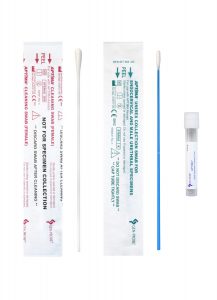
Aptima® Multitest Swab Collection Kit

This kit is used for the following tests:

  • Gonorrhea & Chlamydia (GCCT)
  • Mycoplasma genitalium (MYGAMP)
  • Trichomonas vaginalis (TRVAMP)
  • Candida & Trichomonas (CVTV)
  • Bacterial Vaginosis (BVAMP)

Sample Type

Gonorrhea & Chlamydia (GCCT)

Mycoplasma genitalium (MYGAMP)

Trichomonas vaginalis (TRVAMP)

Candida & Trichomonas (CVTV)

Bacterial Vaginosis (BVAMP)

Clinician-Collected Vaginal Swab

Patient-Collected Vaginal Swab

Patient-Collected Penile Meatal Swab

✓ 

Clinician-Collected Throat Swab

Clinician-Collected Rectal Swab

FDA-approved and preferred

✓ 

FDA-approved and acceptable

FDA-approved but not recommended due to inferior
performance

*

Lab-Developed Test (not FDA-approved)

Aptima® Unisex Swab Collection Kit

This kit is used for the following tests:

  • Gonorrhea & Chlamydia (GCCT)
  • Mycoplasma genitalium (MYGAMP)
  • Trichomonas vaginalis (TRVAMP)

Sample Type

Gonorrhea & Chlamydia (GCCT)

Mycoplasma genitalium (MYGAMP)

Trichomonas vaginalis (TRVAMP)

Candida & Trichomonas (CVTV)

Bacterial Vaginosis (BVAMP)

Clinician-Collected Endocervical Swab

✓ 

✓ 

✓ 

Clinician-Collected Male Urethral Swab

✓ 

*

FDA-approved and preferred

✓ 

FDA-approved and acceptable

FDA-approved but not recommended due to inferior
performance

*

Lab-Developed Test (not FDA-approved)

Aptima® Urine Specimen Collection Kit

This kit is used for the following tests:

  • Gonorrhea & Chlamydia (GCCT)
  • Mycoplasma genitalium (MYGAMP)
  • Trichomonas vaginalis (TRVAMP)

Sample Type

Gonorrhea & Chlamydia (GCCT)

Mycoplasma genitalium (MYGAMP)

Trichomonas vaginalis (TRVAMP)

Candida & Trichomonas (CVTV)

Bacterial Vaginosis (BVAMP)

Female Urine

✓ 

*

Male Urine

✓ ✓

✓ ✓

*

FDA-approved and preferred

✓ 

FDA-approved and acceptable

FDA-approved but not recommended due to inferior
performance

*

Lab-Developed Test (not FDA-approved)

Aptima® Specimen Transfer Kit

Note: This can only be ordered as an add-on test by contacting Client Services.

This kit is used for the following tests:

  • Gonorrhea & Chlamydia (GCCT)
  • Trichomonas vaginalis (TRVAMP)

Sample Type

Gonorrhea & Chlamydia (GCCT)

Mycoplasma genitalium (MYGAMP)

Trichomonas vaginalis (TRVAMP)

Candida & Trichomonas (CVTV)

Bacterial Vaginosis (BVAMP)

ThinPrep® PreservCyt®

✓ 

FDA-approved and preferred

✓ 

FDA-approved and acceptable

FDA-approved but not recommended due to inferior
performance

*

Lab-Developed Test (not FDA-approved)

July 2023: Updates to Recommended Myelodysplastic Syndrome Testing

Clinical Updates

Updates to Recommended Myelodysplastic Syndrome (MDS) Testing

Effective August 17, 2023.

Cleveland Clinic Laboratories’ Molecular Pathology & Cytogenomics section offers several testing options for individuals suspected to have Myelodysplastic Syndrome (MDS):

  • Chromosome Analysis Only  CHRBMH
  • Chromosome Analysis with reflex to FISH with MDS Panel* (if there are no chromosome results or the chromosome analysis was sub-optimalCHRMDS
  • Chromosome Analysis with reflex to Microarray (CMA)  BMCHF
  • FISH Only with MDS Panel*, blood  FSHMDS 
  • FISH Only with MDS Panel*, bone marrow  FSMDSM 

*MDS Panel contains FISH probes specific to chromosomes 5, 7, 8, and 20.

Testing Guidelines 

Per the National Comprehensive Cancer Network (NCCN) Myelodysplastic Syndromes Guidelines [version 1.2023 (09/12/22)] 

If standard cytogenetics (with ≥20 metaphases) cannot be obtained, a chromosome microarray [(CMA), also known as chromosome genomic array testing (CGAT)] or MDS-related fluorescence in situ hybridization (FISH) panel should be performed. If karyotype is normal, consider CMA. Note that CMA will detect not only somatic but constitutional (germline) changes. 

Recommended Testing

In keeping with the NCCN guidelines, Chromosome Analysis with Reflex to FISH (CHRMDS) is Cleveland Clinic Laboratories’ recommended test for individuals suspected to have MDS.

Discontinued Testing

Beginning August 17, 2023, the FISH Only with MDS Panel (FSHMDS & FSMDSM) for blood and bone marrow will be discontinued.
Note: Chromosome Analysis Only (CHRBMH) and Chromosome Analysis with reflex to Microarray (BMCHF) may still be ordered.

Questions?

Please contact your CCL Sales Manager or Client Services at 800.628.6816.

Cleveland Clinic and LabConnect Announce Strategic Alliance

Clinical Update

Cleveland Clinic and LabConnect Announce Strategic Alliance

Collaboration on lab services will accelerate clinical trials to better impact patient care.

Cleveland Clinic Laboratories and LabConnect have announced a strategic alliance to accelerate clinical trials and connect patients to new medicines for improved patient care.

Through this alliance, LabConnect will utilize Cleveland Clinic Laboratories, the reference laboratory within Cleveland Clinic. LabConnect will leverage the health system’s extensive array of testing and assay validation services to support laboratory testing for an increasing number of clinical trials.

CC-SIGN® Targeted Oncology Panel (TOP) by Next-Generation Sequencing

Clinical Updates

New Test: CC-SIGN® Targeted Oncology Panel (TOP) by Next-Generation Sequencing

Available to order starting on June 20, 2023.

A new, enhanced 59-gene hotspot Next-Generation Sequencing (NGS) panel is available for tumor DNA and RNA evaluation.

The Targeted Oncology Panel (TOP) is a custom 59-gene Next-Generation Sequencing (NGS) panel developed for the identification of single nucleotide variants (SNVs), small insertions and deletions (indels), and copy number gains (CNVs) from DNA specimens, and fusion transcripts and aberrant transcripts from RNA specimens.

The workflow allows for the concurrent testing of DNA and RNA to analyze over 1,000 biomarkers.

Targeted Oncology Panel by NGS

Order Codes
TOPTO (FFPE Tissue)
TOPCY (Cytology Alcohol or Formalin fixed cell block)
TOPBM (Bone Marrow Aspirate)
TOPPB (Peripheral Blood)

This test requires 5-10% tumor purity and does not evaluate circulating tumor DNA.

CPT Code
81445

Methodology
Next-Generation Sequencing

Specimen Type
FFPE Tissue
15 charged, unbaked, and unstained slides sectioned at 7 μm.
One pre and one post H&E slide with tumor area circled, and percent rumor indicated.

Cytology
15 charged, unbaked and unstained slides sectioned at 7 μm.
One H&E slide with tumor percent indicated.

Bone Marrow Aspirate
2 mL, Lavender K2EDTA Tube

Peripheral Blood
4 mL, Lavender K2EDTA Tube

Days Performed
2–3 times per week

Turnaround Time
8 days

Overview

Single nucleotide variants (SNVs), small insertions and deletions (indels), copy number gains, select fusions, and aberrant transcripts evaluated by this assay can aid in the diagnostic and therapeutic assessment of a variety of tumor types, including non-small cell lung cancer, melanoma, colorectal cancer, prostate cancer, breast cancer, glioblastoma, thyroid cancer, and others.

This panel can also provide focused tumor profiling for patients with locally advanced/metastatic disease, who are candidates for anti-cancer therapy, to identify uncommon but targetable alterations. In particular, this panel can be utilized for small biopsies and cytology specimens that may not be amenable to more comprehensive genomic sequencing.

Targeted Genes & RNA Fusions

For a full list of targeted genes & RNA fusions, please refer to the Targeted Oncology Panel by Next-Generation Sequencing Technical Brief.

How to Order

Place an order through an electronic interface or complete a Molecular Oncology & Associated Biomarkers Requisition and submit it with the specimen(s).

Hot Spot Panel Discontinuation

The TOP NGS panel will replace solid tumor hotspot mini-panels (Lung, Colorectal, Melanoma, GIST, etc.), as all previously detected biomarkers are included in the new testing.

In situations where the mini-panels were previously used as part of an upfront diagnostic workup, pathologist diagnostic and reflex ordering will utilize TOP testing.