August 2021: Changes to Specimen Requirements, Reference Ranges, and Test Builds

Special Communication

August 2021: Changes to Specimen Requirements, Reference Ranges, and Test Builds

All changes effective August 16, 2021.

Changes to Specimen Requirements

Allergen, Food, Alpha-Gal IgE (GALIGE)

Specimen Requirements

Specimen Type:
Serum

Volume:
0.25 mL

Minimum Volume:
0.25 mL

Collection Container:
Gold Serum Separation Tube (SST)

Transport Temperature:
Refrigerated

Additional Information:
Separate serum from cells ASAP or within 2 hours of collection.

Macroprolactin (MACPRO)

Specimen Requirements

Specimen Type:
Serum

Volume:
1 mL

Minimum Volume:
0.5 mL

Collection Container:
Gold Serum Separation Tube (SST)

Transport Temperature:
Frozen

Additional Information:
Allow specimen to clot completely at room temperature. Separate serum from cells and transfer into a standard aliquot tube.

Alternative Specimen Requirements

Specimen Type:
Plasma

Volume:
1 mL

Minimum Volume:
0.5 mL

Collection Container:
Lavender K2EDTA Tube or Light Green Lithium Heparin Plasma Separator Tube (PST)

Transport Temperature:
Frozen

Additional Information:
Separate plasma from cells and transfer into a standard aliquot tube.

Prolactin, Dilution Study (PROLM)

Specimen Requirements

Specimen Type:
Serum

Volume:
1 mL

Minimum Volume:
1 mL

Collection Container:
Gold Serum Separation Tube (SST)

Transport Temperature:
Frozen

Additional Information:
Allow specimen to clot completely at room temperature. Separate serum from cells and transfer into a standard aliquot tube.

Alternative Specimen Requirements

Specimen Type:
Plasma

Volume:
1 mL

Minimum Volume:
1 mL

Collection Container:
Lavender K2EDTA Tube or Light Green Lithium Heparin Plasma Separator Tube (PST)

Transport Temperature:
Frozen

Additional Information:
Separate plasma from cells and transfer into a standard aliquot tube.

Changes to Reference Ranges

Allergen, Food, Alpha-Gal IgE (GALIGE)

Less than 0.10:
No significant level detected (Class Score 0)

0.10-0.34:
Clinical relevance undetermined (Class Score 0/1)

0.35-0.70:
Low (Class Score 1)

0.71-3.50:
Moderate (Class Score 2)

3.51-17.50:
High (Class Score 3)

17.51-50.00:
Very high (Class Score 4)

50.01-100.00:
Very high (Class Score 5)

Greater than 100.00:
Very high (Class Score 6)

IBD Serology Disease Panel (IBDSER)

Saccharomyces cerevisiae Antibody, IgA

20.0 Units or less:
Negative

20.1-24.9 Units:
Equivocal

25.0 Units or greater:
Positive

Saccharomyces cerevisiae Antibody, IgG

20.0 Units or less:
Negative

20.1-24.9 Units:
Equivocal

25.0 Units or greater:
Positive

ANCA IFA Titer

Less than 1:20

ANCA IFA Pattern

None detected

Macroprolactin (MACPRO)

Prolactin

Male
2.1-17.7 ng/mL

Female, 1-9 years
2.1-17.7 ng/mL

Female, 10 years and older
2.8-29.2 ng/mL

Monomeric, Prolactin

Male
2.1-13.3 ng/mL

Female, 1-9 years
2.1-13.3 ng/mL

Female, 10 years and older
2.8-19.5 ng/mL

Percent
Greater than 50%

Oxalate (OXLATE)

Normal
< or = 2.0 umol/L

Prolactin, Dilution Study (PROLM)

Prolactin

Male
2.1-17.7 ng/mL

Nonpregnant Female, 1-9 years
2.1-17.7 ng/mL

Nonpregnant Female, 10 years and older
2.8-29.2 ng/mL

Nicotine & Metabolites, Urine (UNICOT)

Nicotine
15 ng/mL

Cotinine (metabolite)
15 ng/mL

3-OH-Cotinine (metabolite)
50 ng/mL

Anabasine (tobacco biomarker)
5 ng/mL

Changes to Test Build

Allergen, Food, Alpha-Gal IgE (GALIGE)

Components Affected

Allergen, Food, Alpha-Gal IgE

Reflex: Allergen Interp, Immunocap Score IgE

IBD Serology Disease Panel (IBDSER)

Components Affected

S. cerevisiae Antibody, IgA

S. cerevisiae Antibody, IgG

Inflammatory Bowel Disease Interp

ANCA IFA Titer

ANCA IFA Pattern

EER Inflammatory Bowel Diseases

Nicotine & Metabolites, Urine (UNICOT)

Components Affected

Remove Nornicotine, Urine

Test Discontinuations

HIV-1 Genotype (HIVGEN)

Reason for Discontinuation:
No longer offered by the vendor

Alternative Test:
HIV 1 Drug Resistance by Next Generation Sequencing (HIVNGS)

Anti-Neut Cyto Ab with Reflex to Titer and MPO/PR3 Ab (NCYTO)

Reason for Discontinuation:
No longer offered by the vendor

Alternative Test:
Neutrophil Cytoplasmic Antibody (ANCA)

Any additional information will be included in a future Technical Update.  If you have any questions about these changes, please contact Client Services for assistance.

July 2021: Test Menu Optimization & Discontinuations – MGLESE, MYSGRV, PARSYN

Special Communication

Test Menu Optimization & Discontinuations: MGLESE, MYSGRV, & PARSYN

Cleveland Clinic regularly updates its clinical practices to align with the latest testing practices as a part of our Continuous Improvement efforts.

A recent review has identified tests that will be discontinued in favor of more simple, focused, and cost-effective testing options.

Please refer to the test information below or contact Client Services for assistance.

Test Discontinuations

Effective August 3, 2021.

Myasthenia Gravis (MG)/Lambert-Eaton Syndrome (LES) Evaluation, Serum (MGLESE)

Alternative Tests:

Acetylcholine Receptor Binding Antibody Test (ACHRAB)*

ACHRAB Clinical Info:
Anti-acetylcholine receptor binding antibody test is used as an aid in the diagnosis of myasthenia gravis. A negative result cannot exclude myasthenia gravis. Clinical correlation is required.

*Note: Acetylcholine Receptor Modulating Antibody (ACEMOD) and Muscle-Specific Kinase Antibody (MUSK) can be ordered separately if clinically indicated.

P/Q-Type Voltage-Gated Calcium Channel (VGCC) Antibody Test (VOLTCA)

VOLTCA Clinical Info:
Aids in the evaluation of muscle weakness in the context of neuromuscular junction disorder with or without cancer, or the diagnosis of paraneoplastic neurological syndromes.

Myasthenia Gravis Evaluation with Muscle-Specific Kinase (MuSK) Reflex, Serum (MYSGRV)

Alternative Tests:

Acetylcholine Receptor Binding Antibody Test (ACHRAB)*

ACHRAB Clinical Info:
Anti-acetylcholine receptor binding antibody test is used as an aid in the diagnosis of myasthenia gravis. A negative result cannot exclude myasthenia gravis. Clinical correlation is required.

*Note: Acetylcholine Receptor Modulating Antibody (ACEMOD) and Muscle-Specific Kinase Antibody (MUSK) can be ordered separately if clinically indicated.

Paraneoplastic Syndrome Ab Panel with Reflex (PARSYN)

Alternative Tests:

Paraneoplastic Autoantibody Evaluation, Serum (PARNEO)

PARNEO Clinical Info:
This supplemental testing is recommended in cases of chorea, vision loss, cranial neuropathy, and myelopathy.

July 2021: Immediate Test Discontinuation – Hepatitis A Antibody, Total (AHAVT)

Immediate Test Change

Immediate Test Discontinuation: Hepatitis A Antibody, Total (AHAVT)

Test Discontinuations

Hepatitis A Antibody, Total (AHAVT)

Effective July 1, 2021.

Due to vendor reagent being on backorder, Hepatitis A Antibody, Total (AHAVT)’s initially scheduled discontinuation on August 7 has been expedited to July 1, 2021.

Alternative Tests:

Hepatitis A Antibody, IgG (AHAVG)

AHAVG Clinical Info:
Determines immune status to Hepatitis A Virus (HAV) as a result of vaccination or past infection. Should a recent infection be suspected, this test needs to be ordered with AHAVM.

Hepatitis A Antibody, IgM (AHAVM)

AHAVM Clinical Info:
Assesses acute or recent HAV infection. Note: Methodology not approved for donor testing.

Pathology Insights – Diagnosis of Oncocytic Salivary Gland Tumors with Mobeen Rahman, MD

Pathology Insights Video Series

Diagnosis of Oncocytic Salivary Gland Tumors

Presented by Mobeen Rahman, MD

The diagnosis of oncocytic salivary gland tumors can be challenging, especially on core needle biopsies.

Dr. Mobeen Rahman, staff Head & Neck pathologist, discusses an interesting case that explores this issue.

As part of our educational mission for our clients and communities, Cleveland Clinic Laboratories presents the Pathology Insights video series.
These short videos break down information about interesting pathology cases to better inform doctors, laboratory staff, patients, or anyone interested in the field of pathology. Each episode features important cases, methods, and practices that are personally presented by our staff pathologists.

CC-SIGN® Head & Neck Gene Fusion Next-Generation Sequencing Panel

CC-SIGN® Head & Neck Gene Fusion Next-Generation Sequencing Panel

This customized, 30-gene Next-Generation Sequencing (NGS)-based laboratory-developed test is intended for use in the diagnosis and management of benign and malignant tumors of the head and neck.

In particular, salivary gland neoplasms are broadly covered by this panel—which also covers select mesenchymal tumors and other lesions arising in head and neck sites.

The CC-SIGN® Head & Neck Gene Fusion NGS Panel is available as part of a comprehensive, diagnostic consultation or as a stand-alone test. This laboratory-developed test interrogates gene targets associated with known translocations in salivary gland and other solid tumors. Additionally, this panel identifies the corresponding fusion partner which may be helpful in the selection of treatment targets in some cases.

Results are delivered within 14 days of specimen receipt, allowing for a timely, definitive diagnosis in difficult salivary gland tumors and other head and neck lesions in a stand-alone fashion or with the support of our expert pathologists.

Test Overview

Test Name

Head and Neck Next Generation Sequencing (HDNK)

CPT Codes

81445
88381

Turnaround Time

14 days (upon specimen receipt)

Specimen Requirements

Formalin-fixed, paraffin-embedded (FFPE) tissue
• Ten (10) unstained, 4 μM sections of FFPE on charged, unbaked slides
• One (1) H&E stained slide with best tumor area* circled by a pathologist

*minimum of 20% tumor content for best results

Transport Temperature

Room (ambient) temperature

Specimen Shipping Address

Cleveland Clinic Laboratories
2119 E. 93rd Street, L15
Cleveland, OH 44106

Specimens must be sent via UPS, FedEx, or DHL review our Shipping Information for more details.

Clinical Indications

This test is intended for the diagnosis of benign or malignant mesenchymal tumors (sarcomas & their mimics) as well as other solid tumors.

Targeted Gene Regions

Genes interrogated, including relevant transcripts and exons, are listed in alphabetical order.

A

Gene, Transcript, Exons

ALK
NM_004304
2, 4, 6, 10, 16-23, 25, 26

B

Gene, Transcript, Exons

BRAF
NM_004333
Exons 1-5, 7-16, 18

C

Gene, Transcript, Exons

CAMTA1
NM_015215
Exons 3, 8-10

CRTC1
NM_015321
Exons 1-4

E

Gene, Transcript, Exons

ETV6
NM_001987
Exons 1-7

EWSR1
NM_005243
Exons 4-14

F

Gene, Transcript, Exons

FOS
NM_005252
Exon 4

FOSB
NM_006732
Exons 1, 2

FOXO1
NM_002015
Exons 1-3

FUS
NM_004960
Exons 3-11, 13, 14

G

Gene, Transcript, Exons

GLI1
NM_005269
Exons 4-7

H

Gene, Transcript, Exons

HMGA2
NM_003483
Exons 1-5

M

Gene, Transcript, Exons

MAML2
NM_032427
Exons 2, 3

MKL2
NM_014048
Exons 11-13

MYB
NM_001130173
Exons 7-9, 11-16

N

Gene, Transcript, Exons

NCOA1
NM_147223
Exons 12-15

NR4A3
NM_006981
Exon 2

NR4A3
NM_173200
Exons 3, 4

NTRK1*
NM_002529
Exons 2, 4, 6, 8, 10-14

NTRK2*
NM_006180
Exons 5, 7, 9, 11-18

NTRK3*
NM_001007156
Exon 15

NTRK3*
NM_002530
Exons 4, 7, 10, 12-16

NUTM1
NM_175741
Exons 2-4, 6

*A specimen positive for a fusion in one of these genes makes the patient a candidate for larotrectinib treatment.
Standalone NTRK testing is also available via the CC-SIGN® NTRK Gene Fusion NGS Panel.

P

Gene, Transcript, Exons

PAX3
NM_181459
Exons 6-8

PAX7
NM_002584
Exons 6-8

PLAG1
NM_002655
Exons 1-4

PRKD1
NM_002742
Exons 10-13

R

Gene, Transcript, Exons

RET
NM_020630
Exons 2, 4, 6, 11, 15, 16

RET
NM_020975
Exons 8-14

S

Gene, Transcript, Exons

SS18
NM_001007559
Exons 2-6, 8-11

SS18
NM_005637
Exons 2, 3

STAT6
NM_001178078
Exons 1-7, 15-20

T

Gene, Transcript, Exons

TFE3
NM_006521
Exons 2-8

Y

Gene, Transcript, Exons

YAP1
NM_001130145
Exons 1-9

Pathology Insights – NUT Carcinoma with Sanjay Mukhopadhyay, MD

Pathology Insights Video Series

NUT Carcinoma

Presented by Sanjay Mukhopadhyay, MD

In this video, Sanjay Mukhopadhyay, MD, Director of Pulmonary Pathology at Cleveland Clinic, highlights a rare, aggressive, malignant tumor and draws attention to a distinctive immunohistochemical profile that can serve as a tip-off to the correct diagnosis.

As part of our educational mission for our clients and communities, Cleveland Clinic Laboratories presents the Pathology Insights video series.
These short videos break down information about interesting pathology cases to better inform doctors, laboratory staff, patients, or anyone interested in the field of pathology. Each episode features important cases, methods, and practices that are personally presented by our staff pathologists.

May 2021: National Supply Shortage of Light Blue Coagulation Tubes

Special Communication

Light Blue Coagulation Tubes: National Supply Shortage – Update

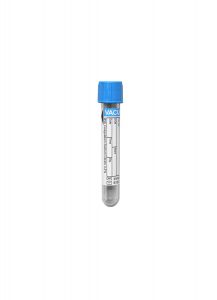
There is a severe nationwide shortage of light blue sodium citrate blood collection tubes used for coagulation laboratory tests such as prothrombin time (PT), activated partial thromboplastin time (aPTT), fibrinogen, and D-dimer.

Currently, no other substitute tube is readily available for coagulation testing.

Given coagulation testing’s critical role in many areas of medicine and surgery, Cleveland Clinic is implementing several supply conservation measures, including:

  • Using a “no additive” tube as a waste tube (instead of a light blue tube) when collecting other blood specimens. 
  • Restricting light blue tubes for use in the ED only for coagulation testing rather than in a routine rainbow draw.

For Ordering Providers:

If a patient is not on anticoagulants or is not going to surgery:

Reconsider the need for routine coagulation testing or consider extending the interval between daily coagulation testing orders. 

If a patient is undergoing treatment with direct oral anti-Xa anticoagulants, such as apixaban or rivaroxaban:

Consider not ordering PT and APTT (they are usually normal in these patients and not helpful in anticoagulant management).  

Due to the severe nationwide shortage, the Robert J. Tomsich Pathology & Laboratory Medicine Institute has updated specimen collection quantity guidelines for 1.8 mL, 2.7 mL, and 3.5 mL light blue sodium citrate coagulation tubes. Refer to the table below for details.

Test Name

Order Code

# of 1.8 mL light blue tubes needed

# of 2.7 mL light blue tubes needed

# of 3.5 mL light blue tubes needed

Platelet Aggregation

12

8

7

Aspirin/Clopidogrel Resistance (Aggregation) Panel

4

3

3

Hypercoagulation Diagnostic Interpretive Panel

5

4

3

Lupus Anticoagulant Diagnostic Interpretive Panel

5

4

3

Platelet Function Screen

4

3

3

PTT Incubated Mixing Study

4

3

3

Cleveland Clinic Laboratories will communicate further updates when available.  Please continue to check our website or contact Client Services at 800.628.6816 for assistance.

Pathology Insights – Diagnosis of CD30+ T-cell Lymphoproliferative Disorders with Genevieve Crane, MD, PhD

Pathology Insights Video Series

Diagnosis of CD30+ T-cell Lymphoproliferative Disorders

Presented by Genevieve Crane, MD, PhD

The diagnosis of CD30+ T-cell lymphoproliferative disorders, including ALK+ and ALK-negative forms of anaplastic large cell lymphoma, can present challenges. These entities show overlapping morphologic and immunohistochemical features but can vary widely in terms of clinical aggression.

Dr. Genevieve Crane, Staff Hematopathologist at Cleveland Clinic, discusses clinical presentation, morphologic features, and emerging prognostic markers that may aid in diagnosis and clinical management.

As part of our educational mission for our clients and communities, Cleveland Clinic Laboratories presents the Pathology Insights video series.
These short videos break down information about interesting pathology cases to better inform doctors, laboratory staff, patients, or anyone interested in the field of pathology. Each episode features important cases, methods, and practices that are personally presented by our staff pathologists.